

Where childhood nostalgia and climate anxiety meet
News and stories to go under the surface of what's happening in Italy, every other week — starting with Milano Cortina, and the Alps

In Italy, most days feels like a tuffo — a “dive” — into chaos. This newsletter is an anchor to make sense of this country and its place in the world, and of the tide of news, analysis, opinions that is constantly washing up on the shores of our attention.
How to pronounce tuffo :
I’m Mara Budgen, a journalist based in Milan, where I returned in 2025 after a five-year stint in Tokyo. (Don’t be fooled by my (British) surname: I’m as italiana as love for carbs and disorderly queueing are.) In this newsletter, published every other week, I dive into the latest news and stories to go under the surface of what’s happening in Italy. No stereotypes about la dolce vita, but an honest look at the currents and events shaping this peninsula that I and 60 million other people call home.
News salad
For this inaugural newsletter, I want to start close to home. The Milano Cortina Winter Olympics are on until the end of the week, followed by the Paralympics in March. As much as this event has fired up people’s pride — aided by Italy’s impressive medal count — it has reignited a (much-needed) conversation about global warming: the Alps, epicentre of elite winter sports and snow-based tourism, are a climate change hotspot that has warmed twice as fast as the rest of the planet over the last century. In Cortina alone, average February temperatures have risen by 3.6°C since the Alpine resort first hosted the Winter Games 70 years ago. That can mean the difference between rain or snow if temperatures are hovering around zero.
All this has prompted much reflection on the future of winter sports and the wisdom of hosting competitions in fragile mountain environments. But before hurling down this slippery slope, here’s the essential news from Italy from the past week or so.
〜 Italy attended the inaugural meeting of the Board of Peace this week as an observer, a move wanted by Prime Minister Meloni and decried by the opposition. Rome can’t join the Board due to constitutional constraints — at least for now.
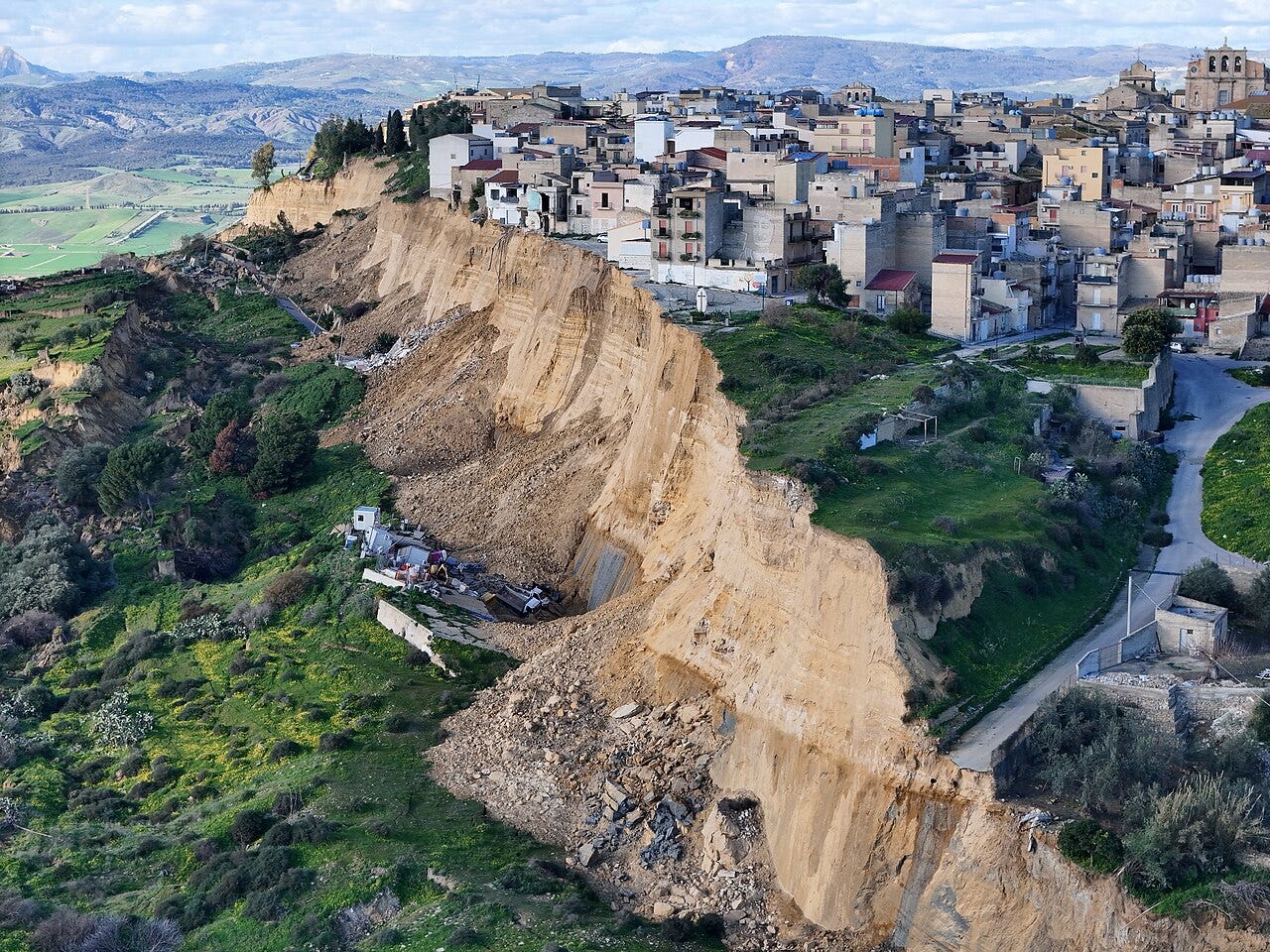
〜 The government has approved 1 billion euros in funds for areas damaged by Cyclone Harry, which wreaked havoc across Sicily, Calabria and Sardinia in January. 150 million euros have been earmarked for Niscemi alone.
〜 The government’s new security decree strengthens police powers and cracks down on the right of assembly, and its proposed immigration bill would enforce a blockade on humanitarian boats and tighten rules around family reunifications.
〜 A court ordered the government to pay 76,000 euros in compensation to Sea Watch for stopping the NGO’s ship from disembarking migrants saved at sea, in 2019. Meloni responded by once again attacking what she called a “politicised” judiciary.
〜 Rai Sport director Paolo Petrecca resigned following criticism of his poor performance commentating the Milano Cortina opening ceremony, which prompted staff at the national broadcaster to announce a strike (now revoked).
〜 A child who underwent a failed transplant in Naples won’t receive a new heart. After the hospital’s failure to follow protocols, which resulted in the child receiving a damaged heart, doctors deemed the boy too sick for another transplant.
If you think these or any other topics warrant a deeper dive, let me know
Winter without snow?
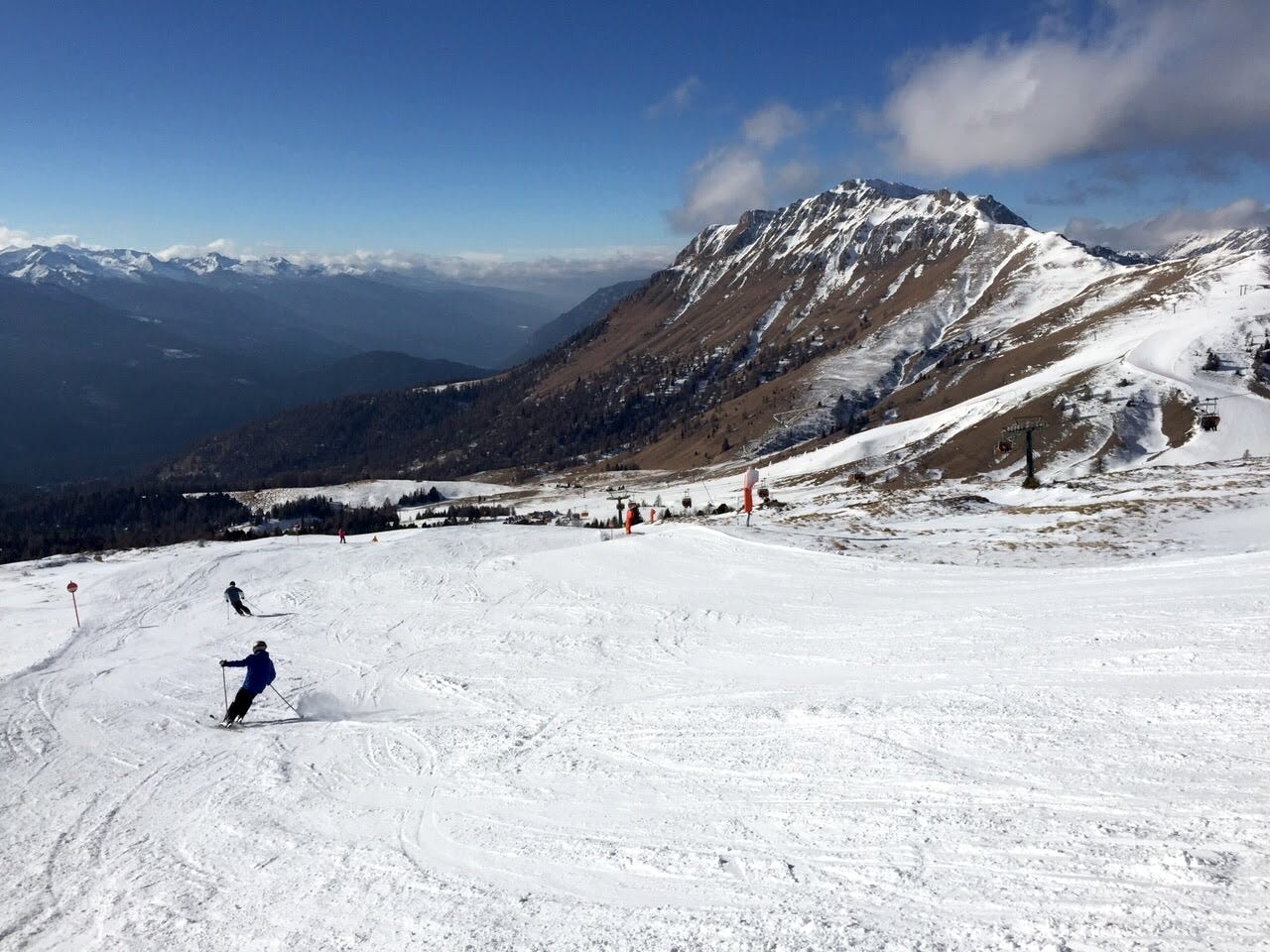
Growing up in northern Italy, skiing in winter was just something people would do. For the (many) families who could (still) afford it, at some point during the Christmas or settimana bianca (“white week”) holidays in February, cars would be packed full of warm clothes, ski gear and excited children and head to one of the many Alpine resorts we had the privilege of living close to.
But that privilege didn’t last. Unseasonably high temperatures and uneven snowfall have increasingly moved the sport onto artificial snow and caused the shuttering of lower-altitude resorts, while prices have soared. We’re sliding towards a point where skiing could become just a collective memory, the psychological equivalent of a snow globe — a scene fixed in our minds but that we can’t touch.
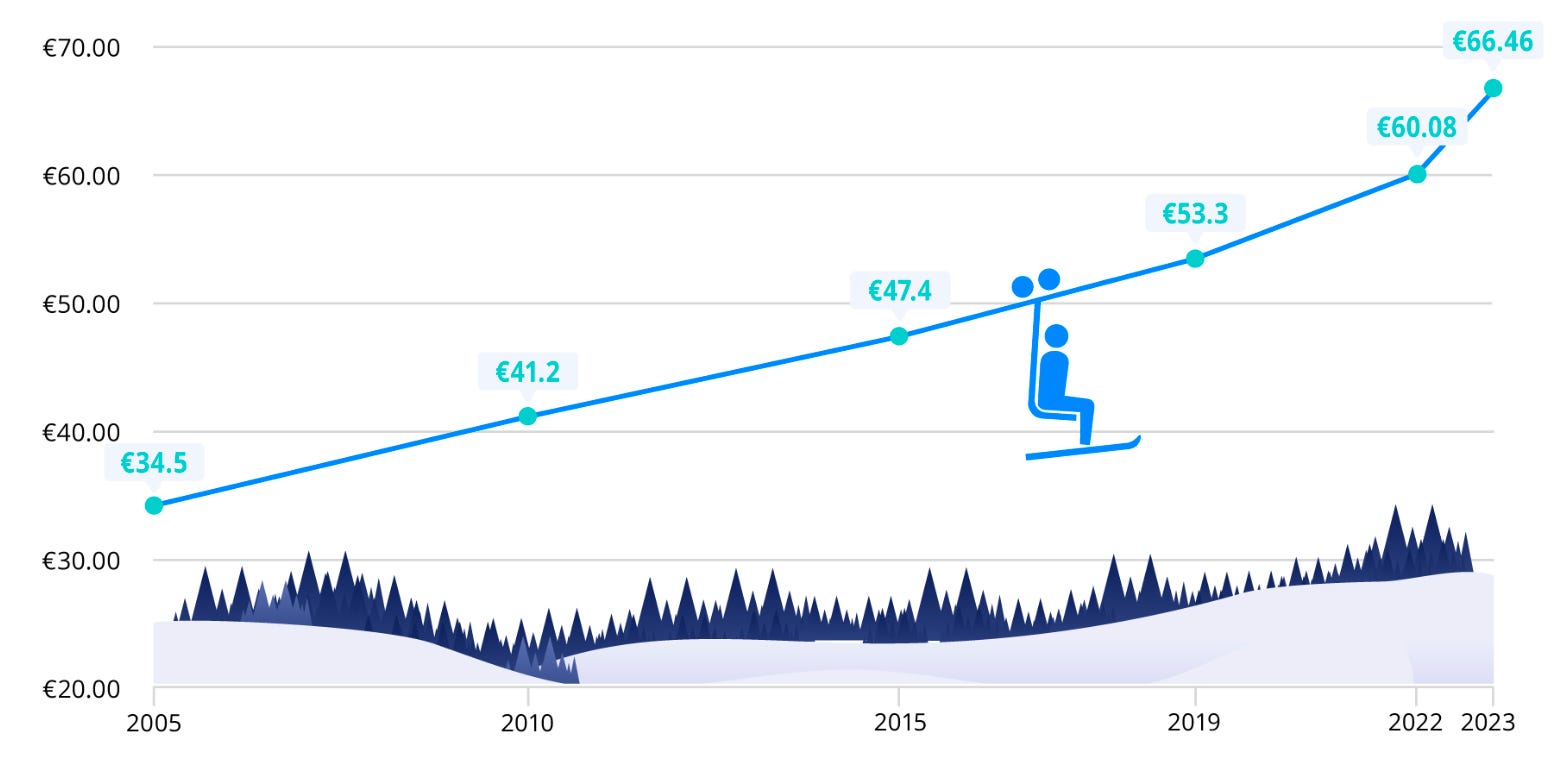
This may seem overly dramatic. After all, 280 ski resorts are still operating in Italy and mountain tourism is expected to generate about 12 billion euros in revenue this winter, almost 4% more than last year. This growth is driven by the presence of more foreigners, no doubt attracted by the Games, which has compensated for a decline in local visitors. It’s also a function of higher prices. Over the last three years, skiers have had to fork out 18% more for their lift passes.
The economics of skiing are anything but clear-cut. National and regional authorities take the side of lift operators in defending its value — so much so that in 2022, the current government adopted a law to keep subsidising ski resorts until 2028. At the same time, serious questions are being asked about the economic, social and environmental costs of keeping this increasingly niche, elite sector afloat. Especially as the planet warms.
According to environmental non-profit Legambiente, 265 ski resorts lay abandoned across the Italian Alps and Apennines, double those recorded five years ago. Sure, there are several factors behind the shuttering of these businesses, but climate change in large part explains this trend.
Since the 1970s, mean snow depth across all of the Alps has declined by over 8% per decade and the snow season is up to 34 days shorter below 2,000 meters. In mid-January, Cima Research Foundation recorded that the snow water volume (the amount of water released if the snowpack melts) across Italy’s two mountain ranges was one-third lower than the average of the last 15 years. (Though the arrival of snow later in the season saved the Milano Cortina organisers from some embarrassment.)
90% of slopes in Italy already rely on artificial snow. Setting aside its environmental impact (high water and energy use, damage to biodiversity) and cost, snowmaking may not even be viable in some cases. A study looking at Belluno province, where Cortina is, not only found that snow cover days could decrease by one-tenth by mid-century, but the number of days suitable for snowmaking could plummet by 40%.
I wrote this article in The Japan Times about how global warming could be dooming the Winter Games
This is the climate in which Italy is hosting the Games. Protests erupted in Milan following the Olympic opening ceremony, with grievances ranging from the event’s environmental cost (sponsorship by fossil-fuel companies, the felling of secular trees to build the bobsleigh track in Cortina, etc.) to its incompatibility with a fraught social atmosphere. Demonstrators clashed with police not far from the Olympic Village, built as part of the redevelopment — read, gentrification — of a low-income neighbourhood. (I talked about the Village’s planned conversion into an unaffordable student dorm in a video, in Italian, on LifeGate’s Instagram and TikTok.)
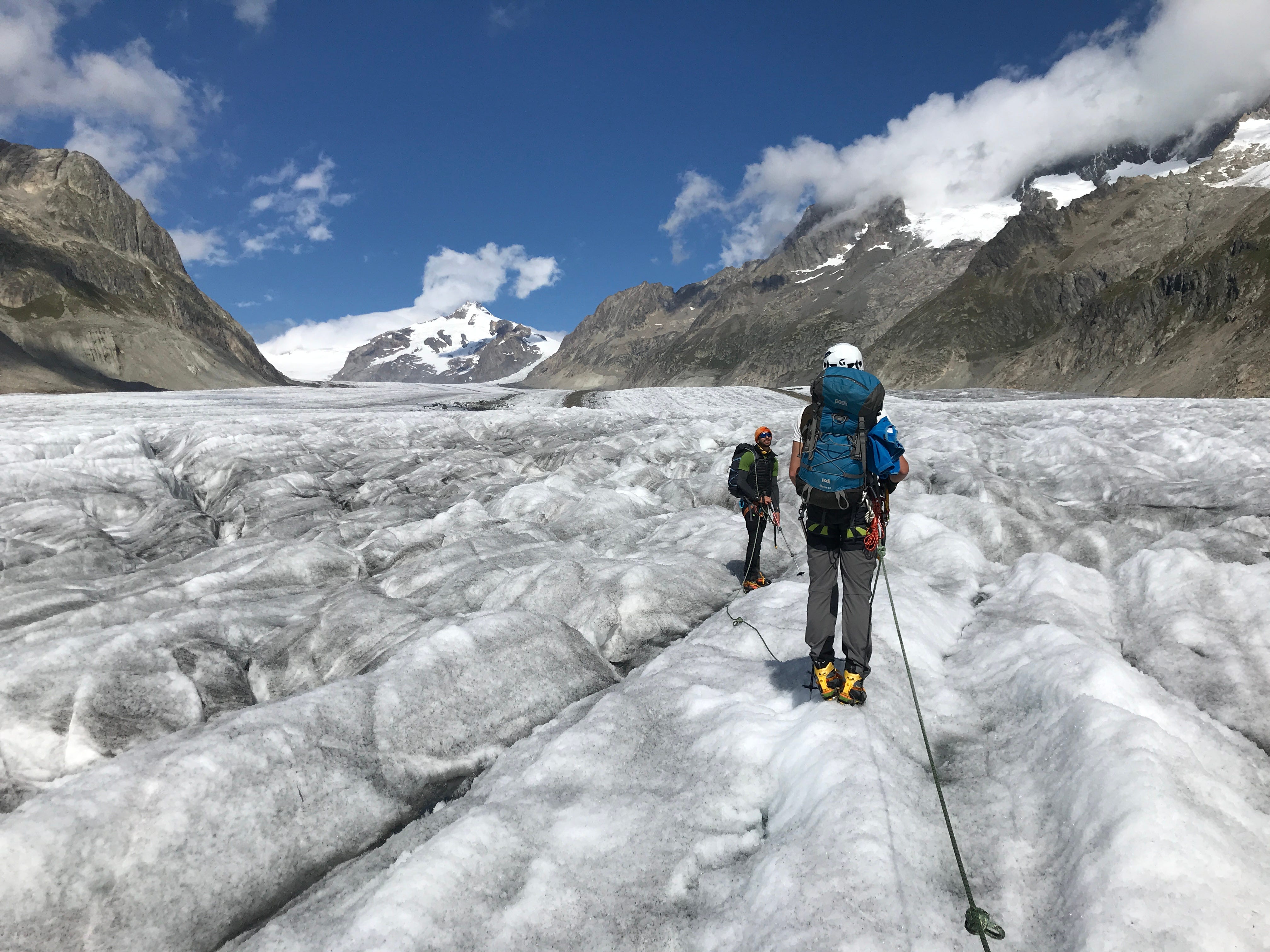
Even in the best-case climate scenarios, the Alps will see less snow, though we can still limit this loss by cutting emissions. Personally, I don’t regret the decline of mass ski-tourism. I don’t even miss skiing that much. What I yearn for is a time when deep snow and sprawling glaciers were just something we could take for granted.
I should've just called it "tough-oh" :))
I didn't know I needed the pronunciation guide, I was deffo pronouncing it like deffo but tough-oh